
Hunting Trips
Packing a Comfortable Observation Kit for a Long Evening Outdoors
October 14, 2026 • Lone Star Varmint Hunts
Packing for a long evening on a Texas ranch can quickly reveal the weaknesses of one's packing choices. That chair that seemed to be okay for your evening sitting on the porch, can become very uncomfortable after a few hours. That light jacket you threw in the truck, can remain lost in the dark of night. A low phone battery can become a great source of anxiety when you least need it. Building an observation kit to ensure a great and comfortable experience at field, is key to making good and sound field decisions and to be able to observe and stay alert for long periods of time. The best guided outing for example, is a quiet stretch of time to observe predators at sunset.
The real problem starts before sunset
The evening's shape: pack for it. Will you be to walk from your vehicle to an observation point and stay there for some hours, or will you be seated for some time, or will you be to move about between various locations? With these kinds of questions in mind, you can begin to pack the comfortable observation kit of useful items for a guided evening of predator observation.
Find out about the meeting point, expected amount of walking, if you will be sitting for extended periods of time and if there is vehicle access. Find out about the weather forecast for the evening as well. Current land rules, hunting regulations and local restrictions can change so check with the relevant official sources such as State or Federal parks departments, hunting licenses commissions etc. Use this information to prevent a perfectly nice ranch trip turning into a horrible endurance test.
For the sake of the example, let's say the group arrives at the designated observation area before dusk and remains there for the rest of the evening. In such a case, a small, portable and effective personal observation system would be in order, not a general camping outfit.
Build around the observation point
First consider a comfortable seat to focus on for long periods of time. A folding chair, a seat on a pad or on a cushion can be the best solution. It is light to carry, easy to set up and to take down again, and does not make any noise when unfolding or packing. A pad is even lighter and often the best solution to seat comfortably for a long time on the ground.
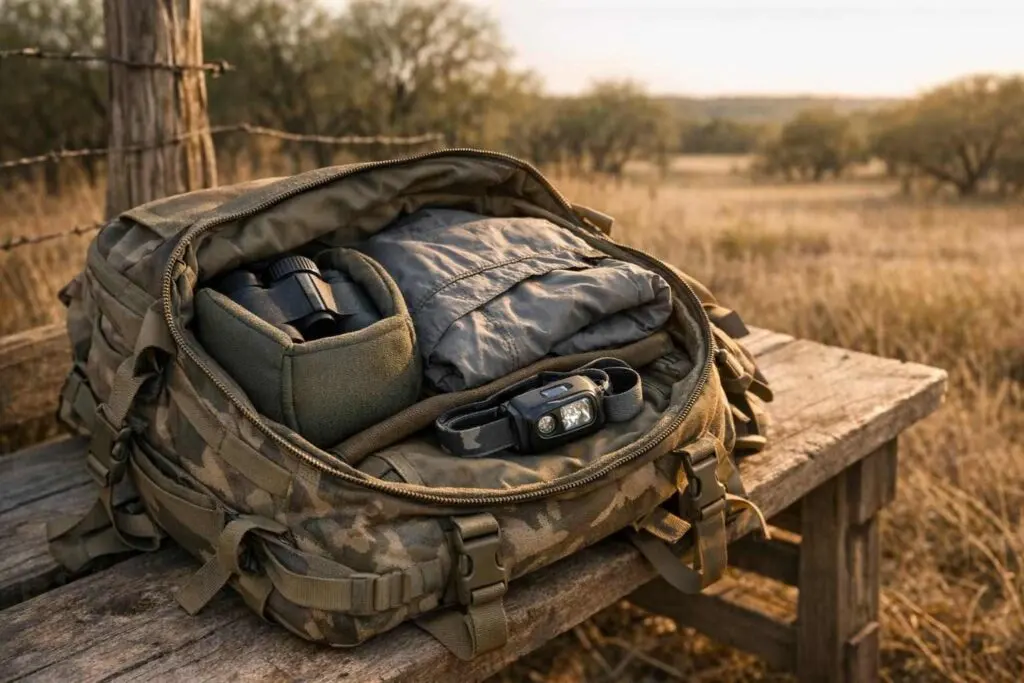
Try to keep most used items within an arm's length. A small pack or even a shoulder bag will carry water, snacks, an additional layer, eye protection, hearing protection, any personal medical needs, and a phone put on silent. Optics need to be kept separate from loose metal objects that could scratch them. The items are best stored in soft pouches to stop them rattling about in the pack.
In turn, avoid bringing so much packed gear that, while walking on uneven terrain through brush, around gates, etc., it will become a problem to carry it. So pack light.
Keep clothing quiet, dry, and adjustable
You never know what the temperature will drop to by sunset, and layering is the better route than hauling one bulky article to rely on after the sun has gone down. A good base layer, insulating layer, and outer shell that can repel wind and light rain is about the best you can do without knowing exactly how cold it will get.
Pay the same attention to the shoes as you do to the layers for your upper body. The ideal footwear for a ranch outing is already broken in and suitable for the terrain that you will be walking on. Check the soles for any unusual wear, the condition of the laces, and generally ensure that they are in good condition before you set off.
Fabric choices in the field must be considered with courtesy to others in your party. Loose-weave fabrics can make the simplest of movements create loud noises that would disturb others from their wildlife viewing. Overly warm clothing will ensure that you be uncomfortable for long periods of time. Test out all of your layers before you leave for your trip and sit, stand, etc. while adjusting collar, etc. If any of the material rubs against other parts of your clothing to create loud scrapes then you must look for alternative combinations.
Pack food, water, and small comforts
Although hunger and dehydration can make bad observers worse, they don't have to be a problem. Pack enough water for the day's trip and a variety of snacks that are quiet to eat. Food that doesn't crumble, doesn't smell, and doesn't require the Observing Natural Behaviorist to rummage through a complicated pack is best. Eat before the group sits down to begin their observing, and then bring only small amounts of each food for the rest of the night.
Comfort items need to solve a problem. So for example bring insect protection, lip balm, toilet paper, hand sanitizer and a small first-aid kit. A charged phone is good for communication and to help with navigation but don't bring a power bank unless you know you're going to use it – and make sure to organize your cables so they're not to get lost and make noise.
Use a flashlight or headlamp to search for gear, to take note of your surroundings, or to obey a call from your guide. Note that many locations prefer that you keep the light low, and sometimes even total darkness. Follow your guide's lead on this.
Make optics and light work together
For a personal observation point, a good pair of binoculars and possibly a portable spotting scope are what you will need. The items should be checked for cleanliness (lenses, body) and for proper focus. Also make sure the straps or the mount are in good working order.
For condensation, dust and finger print mark on lens and oculars, it is better to bring lens cloths and put them in a pocketed area of your gear bag. A small notebook to write down observation, question, area of interest etc is better than bringing an extra piece of gear such as pair of calculators etc.
So while having very high magnification is a good thing in terms of being able to look at more, don't let it become your main criteria for what to bring. Instead, ensure that you are able to positively identify what you are seeing to take a shot at, have a safe field of fire, can communicate with your fellow hunters, and then make responsible hunting decisions based on your observations of wildlife.
Leave room for ethical decisions
Pack your hunting gear in such a way that you can hear the guide's instructions. Enable easy, safe movement, and leave plenty of room for stopping points should you need to. The best hunting gear supports restraint as well as comfort.
Conservation-minded field decisions whether to take an inadvisable shot, move wildlife, be an inconsiderate human on the property, or report a misidentified animal in poor light; a responsible hunter reports his observations accurately.
Be sure to pick up all packaging, battery's, ties, etc. on the way out of the observation point. Make sure you have all of your gear and that the rest of the group is ready to head out. A great ranch hunting evening is not measured by how much gear one uses but rather by whether or not the group stayed safe, were able to observe and enjoy wildlife, were respectful of the property, livestock and wildlife, and made the right decision when the time arrived.